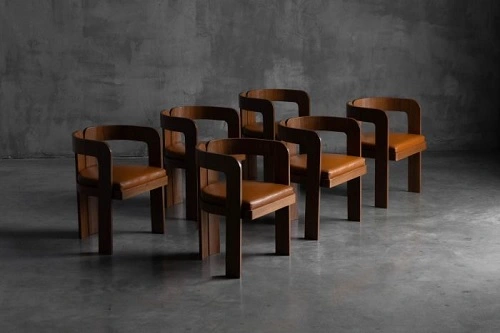
Exceptional interiors are often defined by the relationship between objects, materials, architecture, and history. Rather than relying entirely on contemporary trends, designers and collectors are increasingly exploring established design traditions that offer lasting character. From Folk art and Vernacular craftsmanship to influential modernist movements, these traditions provide inspiration for spaces that feel personal, balanced, and timeless.
The natural simplicity of Alpine Design offers an excellent example of material-focused aesthetics. Inspired by mountain environments, it often emphasizes timber, practical construction, tactile surfaces, and a close connection with nature. Similar qualities appear in Rural interiors, where simplicity and functionality create an inviting atmosphere. Rustic Furniture strengthens this aesthetic through natural wood, visible craftsmanship, organic imperfections, and substantial forms that bring warmth to contemporary spaces.
Architectural philosophy can transform simplicity into something highly sophisticated. Dom Hans van der Laan explored proportion, geometry, and spatial relationships with exceptional precision. His principles demonstrate that restrained design can create a powerful sense of harmony. Meanwhile, Wabi Sabi encourages appreciation for imperfection, age, irregularity, and natural change. Together, these perspectives offer an alternative to interiors dominated by flawless finishes and excessive decoration.
Historical European movements provide another important source of inspiration. The Amsterdamse School became known for expressive architecture, handcrafted details, and distinctive forms. In contrast, Art Deco introduced geometric patterns, luxurious materials, symmetry, and visual sophistication. These traditions continue to influence contemporary interiors because they provide strong identities without losing their connection to craftsmanship.
The evolution toward Mid-Century Design brought another significant transformation. Designers began emphasizing clean silhouettes, organic forms, innovative materials, and furniture that responded directly to modern lifestyles. This movement demonstrated that practical furniture could also possess exceptional artistic quality. Its influence remains evident in contemporary residential, hospitality, and commercial interiors.
Design history becomes even richer when international perspectives are considered. Brazilian Design introduced an expressive relationship between architecture, landscape, craftsmanship, and natural materials. Its relaxed yet sophisticated character has influenced designers around the world. Pierre Chapo similarly demonstrated the expressive potential of timber, creating furniture in which structural strength and sculptural beauty coexist.
The work of Charlotte Perriand provides another important lesson in human-centered design. Her approach emphasized comfort, practicality, and the relationship between furniture and everyday living. This philosophy closely relates to Functional Art, where furniture becomes more than a useful object. A well-designed piece can simultaneously provide comfort, solve a practical requirement, and contribute artistic character to its surroundings.
Industrial innovation also transformed furniture design during the twentieth century. Jean Prouvé combined engineering knowledge with furniture making, allowing construction and structure to become essential parts of the visual language. His work remains influential for its honesty, efficiency, and intelligent use of materials. Afra & Tobia Scarpa followed a similarly thoughtful path, combining technical innovation with refined proportions, tactile qualities, and exceptional attention to detail.
The sculptural possibilities of furniture are particularly visible in the work of Mario Bellini. His designs demonstrate how seating and other functional objects can influence the architecture of an entire room. The Camaleonda remains a particularly recognizable example of modular thinking, allowing flexible arrangements while maintaining a strong sculptural identity. Such designs show how furniture can organize social spaces as effectively as walls and architectural structures.
Natural timber has remained central to many important design philosophies. Nakashima celebrated the individuality of wood, allowing grain, edges, knots, and natural variations to remain visible. His approach created a deep connection between craftsmanship and the character of the material. Pierre Jeanneret also demonstrated how furniture could combine strong geometric forms with natural materials, producing pieces that remain relevant across generations.
This heritage provides useful context for the contemporary design perspective associated with boris devis. Today’s collectors often seek furniture that combines historical importance, craftsmanship, material quality, and distinctive visual character. Goldwood by Boris furniture can be considered within this broader appreciation for pieces that bring personality and depth to carefully designed environments.
For those interested in Goldwood by Boris Antwerp, the appeal extends beyond individual furniture pieces. Goldwood by Boris interiors can bring together contrasting influences, allowing rustic timber, modernist geometry, sculptural seating, and architectural simplicity to exist within one coherent environment. Such combinations create interiors that feel collected over time rather than designed according to a temporary trend.
The philosophy associated with a Boris Devis designer approach places importance on balance and individuality. A substantial wooden table may become the visual anchor of a room, while a sculptural chair introduces contrast. Vintage furniture can provide historical depth, while contemporary architecture offers a clean background. When these elements are carefully selected, each piece contributes to a larger narrative without competing for attention.
The Goldwood by Boris collection reflects an appreciation for furniture that possesses both visual and material significance. In this context, Goldwood by Boris represents a design perspective where craftsmanship, authenticity, proportion, and heritage can work together. Furniture becomes part of the architecture and part of everyday life, rather than functioning simply as decoration.
Ultimately, enduring interiors are created through thoughtful choices rather than temporary fashion. The lessons of Folk art, Vernacular traditions, modernism, industrial design, and contemporary craftsmanship demonstrate that beautiful spaces can remain relevant when they respect materials and human experience. By combining history with functionality and individuality, designers can create environments that feel sophisticated today while retaining their value and character for years to come.
CONGRATULATION! YOU’VE FINISHED THIS BLOG.