The United Arab Emirates is becoming a leading destination for advanced infrastructure, commercial construction, industrial development, and digital transformation. As modern facilities become more technologically advanced, engineering consultants increasingly rely on computational simulations to improve system performance, maintain safety, and achieve operational efficiency.
Computational Fluid Dynamics (CFD) is an advanced engineering approach that helps analyse airflow, heat transfer, temperature variations, ventilation systems, and smoke movement. It enables engineers to investigate complex environmental conditions and evaluate different design possibilities before physical implementation. From critical cooling infrastructure to public safety assessments, CFD modelling contributes to better engineering decisions and more reliable project outcomes.
Reliable Cooling Infrastructure for Data Centre UAE
Data centres require carefully controlled environmental conditions to protect servers, networking equipment, and other sensitive electronic systems. In the UAE, high outdoor temperatures increase the importance of efficient cooling infrastructure and accurate thermal management.
Professional Data Centre UAE assessments help engineers evaluate cooling capacity, airflow distribution, temperature variations, and equipment positioning. CFD simulations can identify overheating risks, insufficient ventilation, and potential air recirculation within server rooms.
These assessments support improved cooling arrangements and help facility operators maintain consistent environmental conditions. Effective design evaluation also contributes to reducing unnecessary energy consumption and improving long-term operational reliability.
Advanced Simulation Capabilities with Ansys Fluent CFD
Accurate computational analysis is essential for understanding complex engineering systems. Ansys Fluent CFD provides powerful simulation capabilities for studying fluid movement, heat transfer, turbulence, pressure distribution, and thermal behaviour.
Engineers can use advanced numerical modelling to examine different operating scenarios and evaluate the effectiveness of proposed engineering designs. Simulation results provide valuable information about system performance and help identify potential problems before construction or installation.
This approach is particularly beneficial for large infrastructure developments where performance, safety, and operational efficiency are important project requirements.
Improving Equipment Performance Through Chiller yard CFD
Chiller yards require appropriate equipment arrangements and sufficient airflow to maintain efficient cooling operations. Poorly designed layouts may cause exhaust air recirculation, airflow restrictions, and elevated equipment temperatures.
A professional Chiller yard CFD assessment investigates airflow patterns around cooling equipment, discharge conditions, surrounding structures, and environmental influences.
The simulation helps engineers identify problematic airflow zones and evaluate alternative equipment configurations. By understanding these conditions, project teams can improve equipment positioning and develop more effective cooling infrastructure.
Optimising Industrial Cooling with Cooling Tower Analysis
Cooling towers are widely used in commercial buildings, industrial plants, and large mechanical installations. Their effectiveness depends on proper airflow distribution and efficient heat rejection.
Professional Cooling Tower Analysis evaluates airflow behaviour, exhaust discharge, thermal interactions, and potential recirculation between nearby cooling towers.
CFD simulations also help determine how surrounding buildings, structural obstructions, and environmental conditions influence cooling tower performance. The results support improved installation planning and more reliable cooling operations.
Creating Better Indoor Conditions Through Thermal Comfort CFD Analysis
Modern buildings require effective HVAC systems to maintain comfortable indoor environments. Poor air distribution, uneven temperatures, and insufficient ventilation can affect occupant satisfaction and building efficiency.
Thermal Comfort CFD Analysis provides detailed information about indoor airflow, air velocity, temperature distribution, and ventilation effectiveness.
Engineers can assess HVAC diffuser arrangements, identify uncomfortable areas, and evaluate alternative ventilation strategies. These studies are valuable for offices, hotels, hospitals, educational facilities, and large commercial developments.
Enhancing Thermal Reliability with Data Centre CFD
Cooling performance is one of the most important factors influencing data centre reliability. Data Centre CFD simulations help engineers understand airflow movement across server racks, cooling corridors, raised floors, and air-conditioning equipment.
The analysis identifies potential thermal hotspots, bypass airflow, recirculation, and uneven cooling distribution. Engineers can use these findings to improve cooling layouts and develop more effective thermal management strategies.
Such assessments are especially important for UAE data centres operating under demanding climatic conditions and continuous equipment loads.
Strengthening Transportation Safety Through Tunnel Fire Modelling
Tunnel fire incidents require specialised engineering assessments because smoke and heat can spread through enclosed environments and create dangerous conditions.
Tunnel Fire Modelling enables engineers to simulate fire development, temperature distribution, smoke propagation, and ventilation performance. Different fire scenarios can be evaluated to understand how smoke behaves and how ventilation systems influence its movement.
These simulations provide valuable technical information for fire safety planning, ventilation design, and emergency preparedness.
Better Pedestrian Management with Crowd Modelling
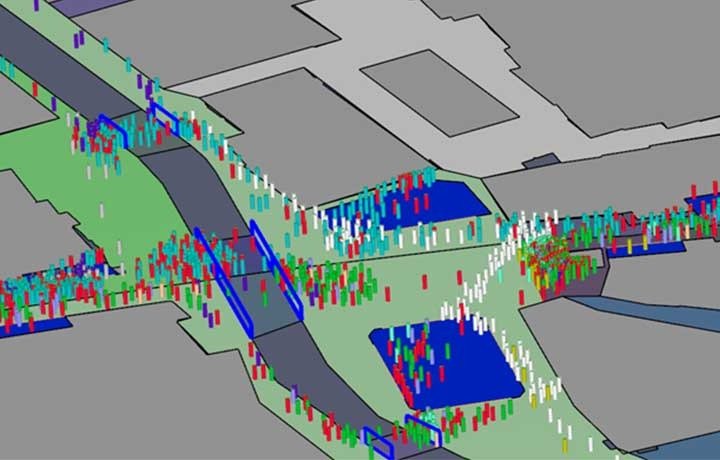
Public facilities must accommodate pedestrian movement while maintaining appropriate safety and circulation conditions. Airports, stadiums, exhibition centres, and shopping malls can experience significant crowd movement during busy periods.
Crowd Modelling helps engineers analyse pedestrian distribution, movement patterns, congestion areas, and potential bottlenecks.
Simulation findings support better entrance planning, circulation arrangements, and pedestrian management strategies.
Improving Building Evacuation Through Egress Modelling
Emergency evacuation planning is an important requirement for commercial and public buildings. Egress Modelling evaluates evacuation routes, occupant movement, exit accessibility, and potential congestion during emergency situations.
Engineers can examine different evacuation scenarios to identify weaknesses in building layouts and improve emergency planning arrangements.
Advanced Fire Protection with Smoke Modelling
Smoke movement can significantly influence visibility, evacuation conditions, and occupant safety during fire incidents. Smoke Modelling helps engineers examine smoke propagation, temperature distribution, ventilation effectiveness, and potential smoke accumulation.
The simulation results support the evaluation of smoke extraction systems and smoke management strategies. These assessments provide important information for developing safer building environments.
Professional Thermal comfort analysis CFD UAE Services
The UAE’s climatic conditions make indoor thermal management an essential part of modern building design. Thermal comfort analysis CFD UAE services help evaluate airflow distribution, indoor temperatures, ventilation effectiveness, and occupant comfort.
These simulations allow engineers to identify inefficient HVAC arrangements and recommend improvements that support better indoor environmental conditions and energy performance.
Conclusion
CFD engineering has become an important part of modern infrastructure development, supporting efficient cooling systems, reliable building performance, and effective fire safety planning. Through accurate computational simulations, engineers can identify potential challenges and make informed decisions throughout the project lifecycle.
lavaconsultants delivers engineering-focused simulation solutions using advanced computational methodologies. By combining technical expertise with detailed engineering assessments, lavaconsultants supports improved infrastructure performance, operational reliability, and sustainable development across the UAE.
CONGRATULATION! YOU’VE FINISHED THIS BLOG.